
Blog
Yellow or Brown Stain on the Ceiling Under a Bathroom: What It Means
A yellow or brown stain on the ceiling under a bathroom usually means water is leaking from the room above. Common sources are the toilet's wax seal or flange, a supply line, or the tub or shower drain. Note whether it grows after flushes or showers, don't paint over it, and get the leak fixed first.
Good Life Home Co. finds the leak and repairs the floor above and the ceiling below with one in-house team in Fort Collins, Windsor, and Loveland. Call or text 970-610-6200.
Written with Luke Buelow, Colorado master plumber, Good Life Home Co.
A yellow or brown stain on the ceiling under a bathroom is usually the first thing you see. The bathroom upstairs can look fine. A ceiling stain under a bathroom means water left that room through the floor space, and the ceiling below is where it showed up.
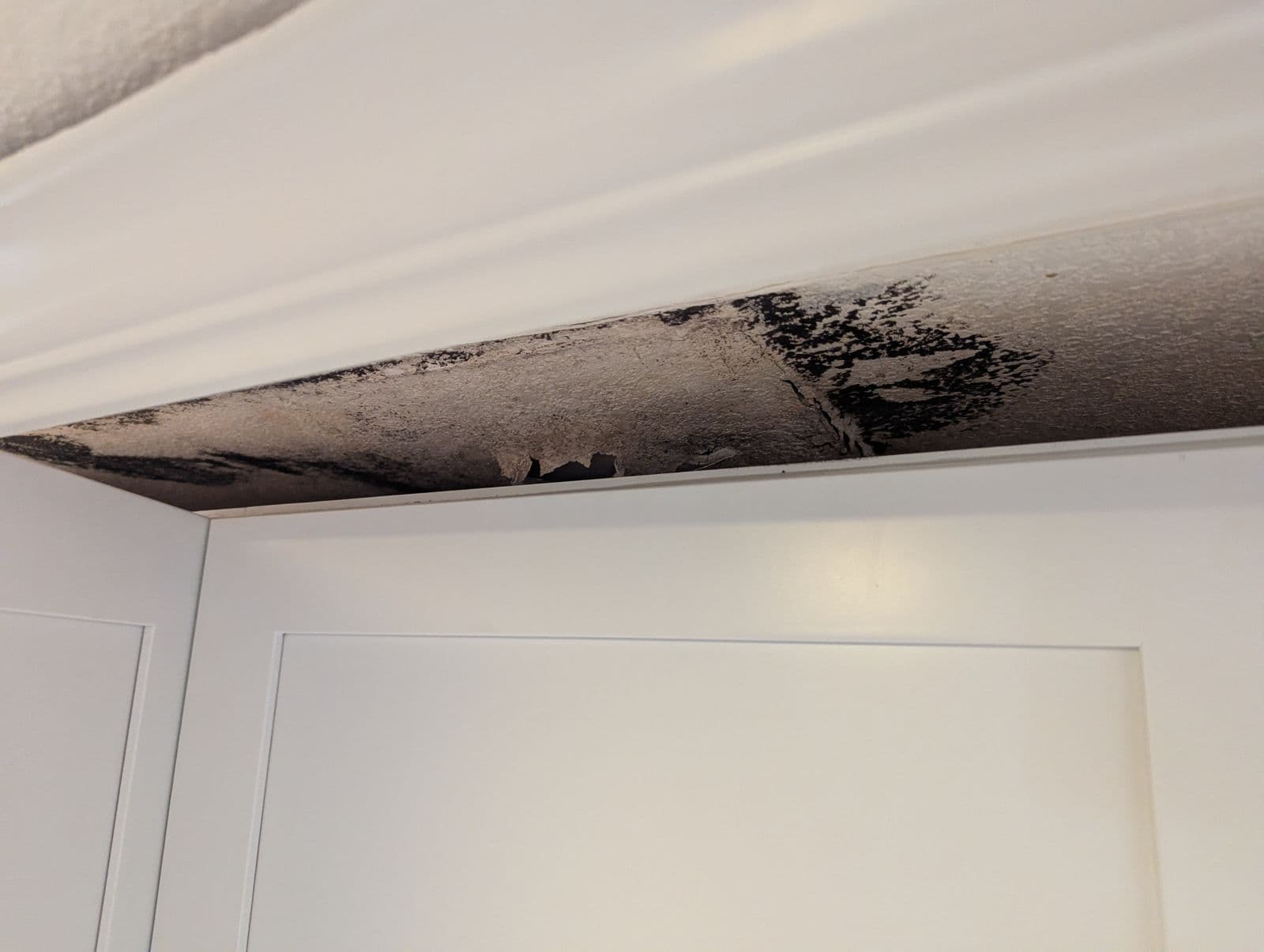
What a yellow or brown ceiling stain under a bathroom is telling you
The water came from above. Yellow, tan, or brown rings are water that soaked through drywall and dried. Color alone does not name the fixture, or tell supply water from drain water.
The bathroom looks fine because the leak runs into the floor space, not onto the bathroom floor. A stain can be old and finished, or still growing. Water can travel along joists and pipes before it drops, so the stain may not sit directly under the leak. Have discoloration checked. We remove and replace water-damaged materials once the source is known.
The usual sources above the stain
The usual sources are the toilet seal, a supply line, the tub or shower drain, the shower surround, or the tub overflow. Timing is the tell for toilet leaks. If the floor by the toilet also gives, that scope is toilet leak floor damage repair.
The toilet's wax seal or flange
Water gets past a failed wax seal, or a cracked, broken, or too-low flange, with each flush and runs through the subfloor.
The tell: the stain sits under or near the toilet and grows after flushes. A toilet that moves, a soft floor, or a smell at the base backs that up. See when a toilet smells like sewage, what a soft floor near the toilet means, and why a toilet rocks and whether the floor is rotten. A plumber confirms it by pulling the toilet.
A supply line or shutoff valve
The line to the toilet, sink, or tub can drip at a connection or at the shutoff, whether or not anyone is using the room.
The tell: the stain grows when nobody has used the bathroom. Shut that fixture's supply valve, clockwise, if it is easy, or the main shutoff if you know where it is, and call. See supply line leaks.
The tub or shower drain
Joints under the tub or shower leak when water goes down the drain, into the floor space, not onto the bathroom floor.
The tell: the stain grows after baths or showers, often a little off from the fixture.
The shower surround, pan, or tub edge
Failed grout, caulk, or a pan lets shower water behind the wall or under the base. Upstairs you may see loose tile, cracked grout, or a caulk gap.
The tell: it grows after showers, and the finish upstairs already shows a gap. We find the source and tell you what fixing it takes. Leak came from the shower? See shower repair.
The tub overflow
The overflow gasket leaks when the tub is filled high enough to reach it. Showers do not fill the tub to that hole.
The tell: stains show up after a full bath, not after showers.
Under the bathroom sink
A drip in the vanity can cross the cabinet and go through the floor. The cabinet may swell first.
The tell: a soft or stained cabinet, and a ceiling stain near the sink. See under-sink leaks.
If the stain is under a laundry or near a water heater instead, see water heater leaks. That is not this page's topic.
Simple triage: does it grow after flushes or after showers?
No tools and no ladders are needed. You are watching the stain and noting what happens upstairs.
- Mark and date it. Lightly trace the edge with a pencil, from a sturdy step stool only if you can reach it safely. Otherwise photograph it from the same spot each day, and write the date.
- Map it. Note what sits above: the toilet, the tub or shower, the sink, or a wall where pipes run. Water can travel before it drops, so this narrows it down and does not prove it.
- Watch it against use for a few days. Grows after flushes: toilet seal or flange. Grows after showers or baths: the drain, the shower surround or pan, or the tub overflow if it only shows after a full bath. Grows even when nobody uses the bathroom: likely a supply line. Call, and turn off the supply valve under that fixture, clockwise, if it is easy, or the main shutoff if you know where it is. See supply line leaks. Does not change and feels dry: it may be an old leak that is already fixed. It still needs checking before any paint.
- Look upstairs. A toilet that moves, a soft floor at the base, water at the base after a flush, cracked grout, or gaps in the caulk. If the toilet moves or the floor gives, see why a toilet rocks and whether the floor is rotten and what a soft floor near the toilet means.
- Take photos of the stain, the floor at the toilet base, and the tub or shower edges.
Stop and call if:
- The ceiling is bulging, sagging, or dripping. Keep people out from under it, put a bucket down, and do not poke it.
- Water is near a light fixture or fan. Leave that fixture off.
- The stain is growing with no fixture use.
- Water shows at the toilet base after flushing. Use another toilet if you have one.
Do not paint or prime over an active stain, caulk the toilet base to seal it, cut into the ceiling, or keep using a fixture you suspect. Call or text 970-610-6200. We book it as a plumbing visit.
Why you should not just paint over it
The stain is evidence. Paint hides how fast it is growing, and the leak keeps going into the floor and the ceiling. A water stain usually bleeds back through ordinary paint. A dry, fixed stain needs a stain-blocking primer, or new drywall if it is soft or sagging. Paint does not dry wet drywall, and it does not show you the wood above it.
The ceiling is the last thing fixed. Once the leak is fixed and the area is dry, patch and paint can be a handyman visit: drywall and paint repair. If the source has not been found, book the plumbing visit first.
What the repair involves, from the source to the ceiling
The first look and quote is usually within a couple of days. There is no price on this page, and no promise of how long a repair takes.
- Find the source. The owner, a Colorado master plumber, checks the bathroom above and the ceiling below. The price is agreed before work starts.
- Fix the leak. A new seal and flange, a supply line or valve, or the drain connection.
- Dry it. A small wet area is cleaned up and dried with the repair. If the damage is bigger than a small cleanup, we say so and refer that part to a restoration partner. The leak repair can still be ours.
- Open and repair the ceiling. Damaged drywall comes out so we can see how far the water traveled, then new drywall, texture, primer, and paint.
- Repair the floor above if needed. A toilet leak that soaked the subfloor means the toilet comes up, water-damaged materials come out, and the flange, subfloor, flooring, and trim are rebuilt. That is toilet leak floor damage repair.
- Repair joists if damaged. If water reached the framing, the same team repairs the floor joists before new subfloor goes down. They are checked once it is open. See floor joist repair.
If something different turns up, we stop and talk first. That is the No Change Order Guarantee. The price we agree to on site is the price you pay for that scope. If the job changes, we talk first — we do not surprise you later.
A real example: toilet leak into a Fort Collins kitchen ceiling
A Fort Collins homeowner had water damage spreading across the kitchen ceiling and wall above the upper cabinets. The bathroom sits directly above. We took down the two upper cabinets and cut out the damaged drywall to see how far the water had traveled. Upstairs, we pulled the old linoleum and the damaged subfloor around the toilet and found a broken toilet flange letting water through to the kitchen below.
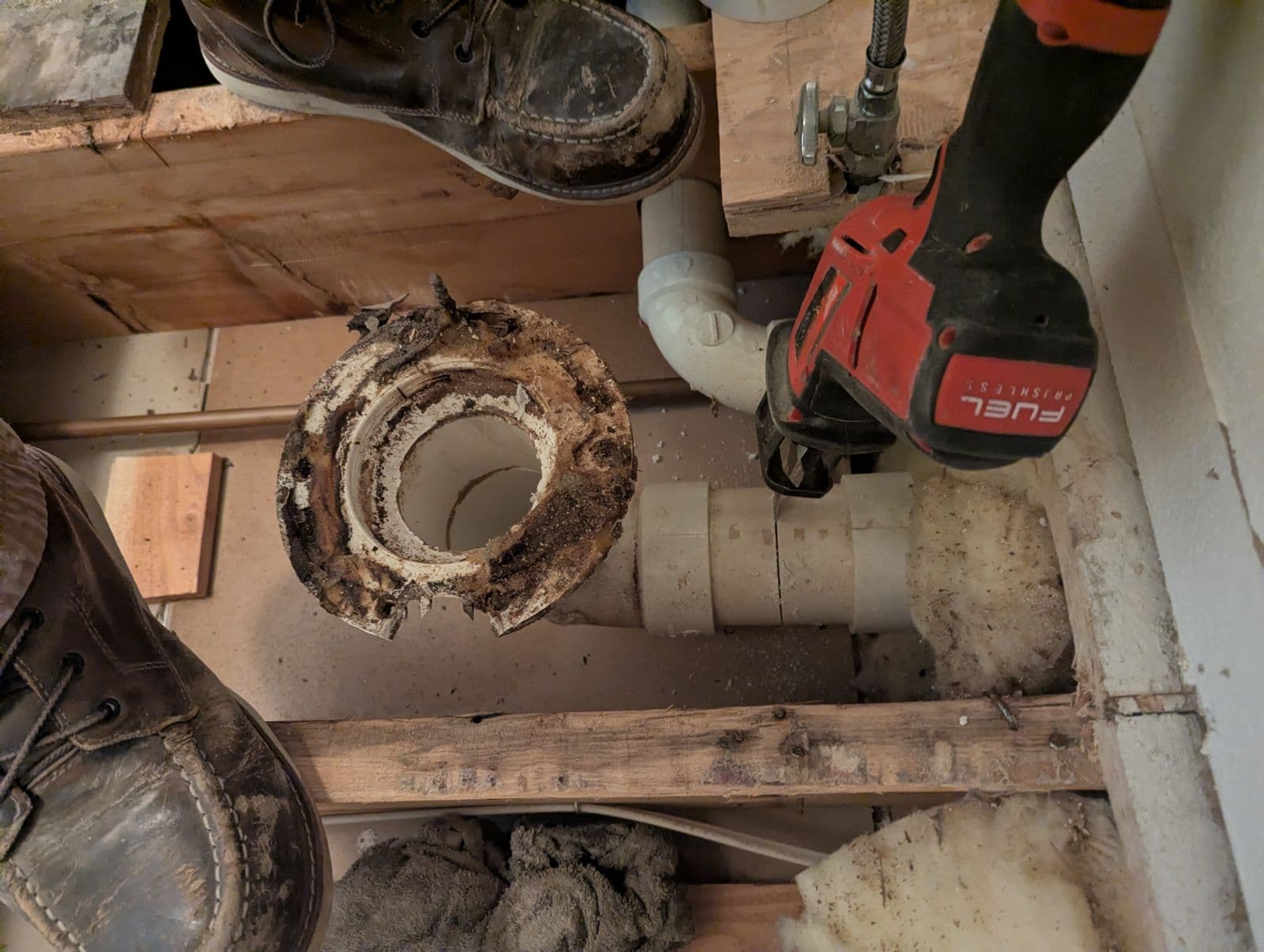
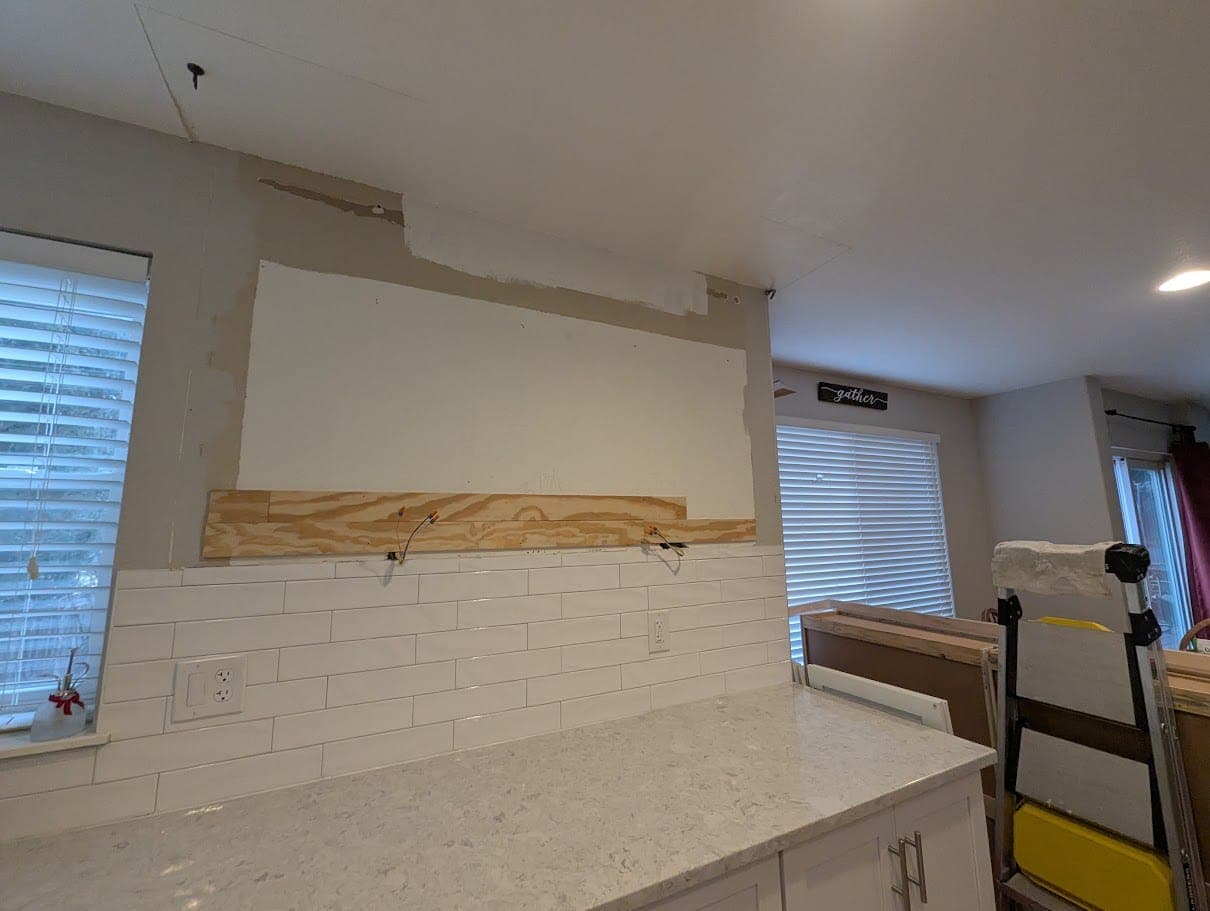
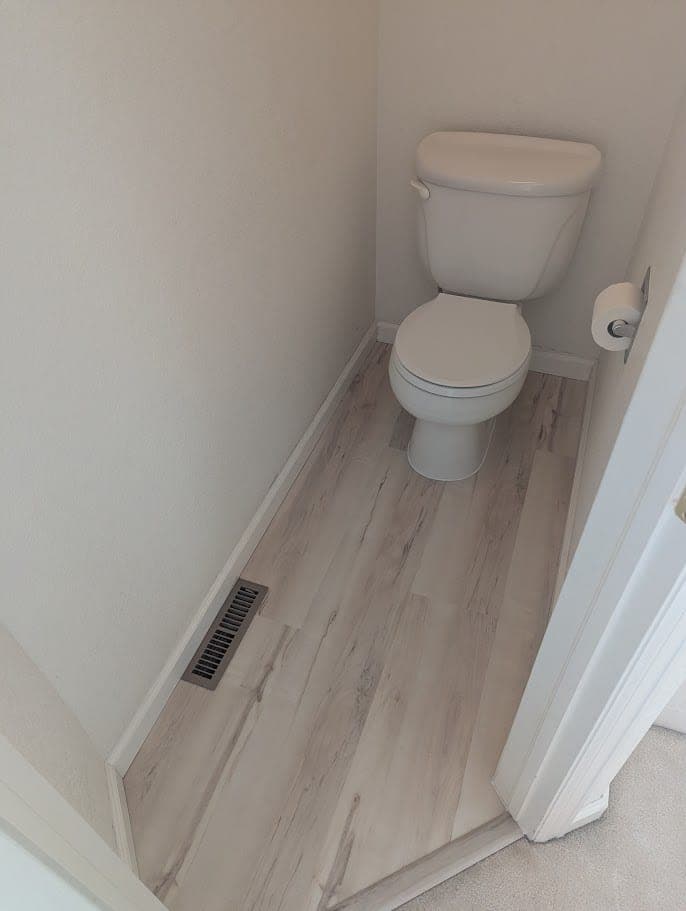
In the bathroom, we cut in a new drain elbow, set a new flange at the right height for the finished floor, and installed new subfloor, about 20 square feet of new flooring, and a transition strip to the carpet. Then we reinstalled the toilet and baseboards. In the kitchen, we replaced the damaged drywall, matched the texture, primed and painted, and rehung the cabinets and crown moulding.
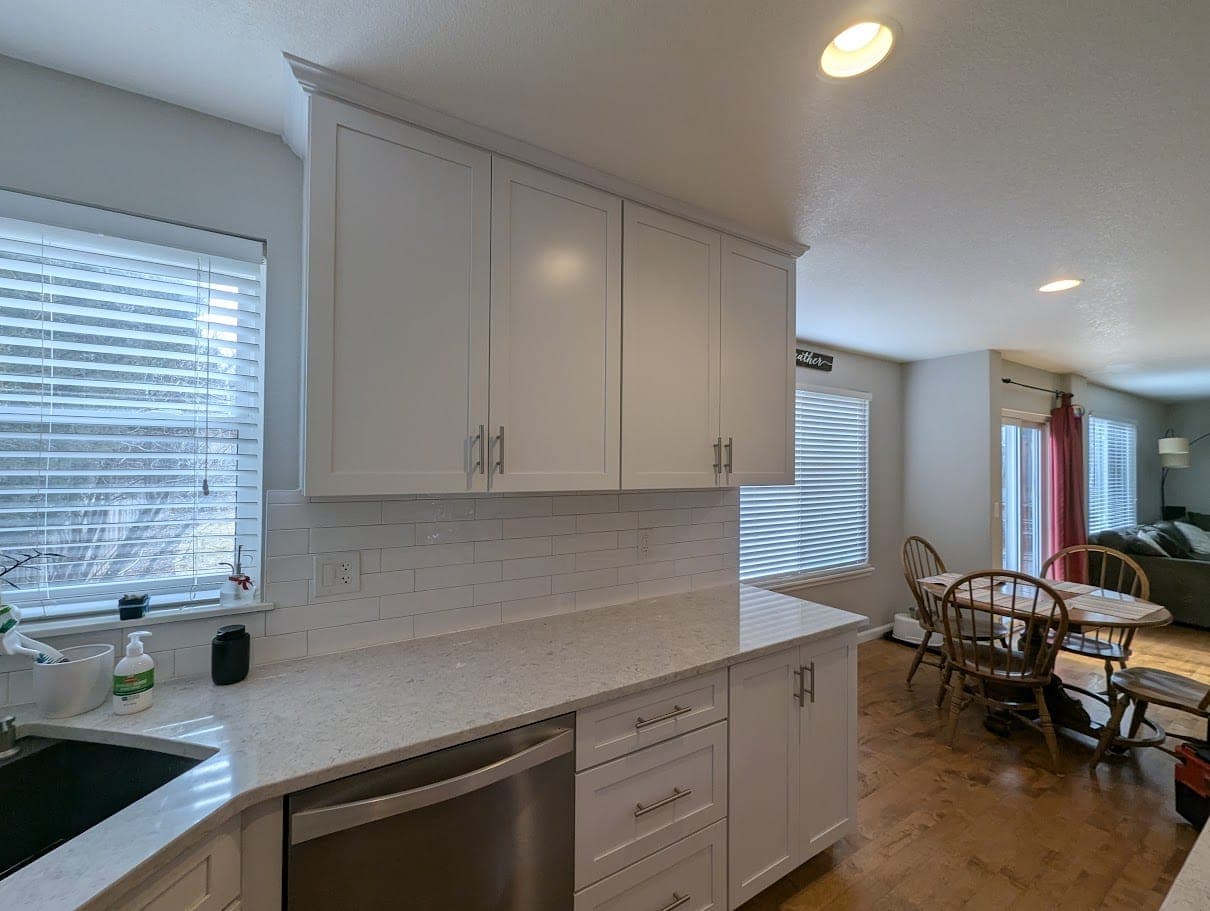
Read the Fort Collins case study. Call or text 970-610-6200 with a photo of the stain and one of the bathroom above.
Why one team matters for a ceiling-and-floor job
A stain under a bathroom usually needs a plumber, a carpenter, and someone for the ceiling. Good Life Home Co. does all three in-house, under one price agreed up front, backed by the 3 Year Workmanship Guarantee. If our workmanship fails within three years, we come back and make it right. Materials follow manufacturer coverage.
The site shows 5.0 from 63 Google reviews. One of those reviews, from Eric, says: "He clearly explained the process, provided options, answered questions and the results were excellent." The owner is a Colorado master plumber. The company was founded in 2021. Financing is available. Ask when you call or text. We do this work as a plumber in Fort Collins, a plumber in Windsor, and a plumber in Loveland.
Frequently asked questions
What causes a yellow or brown stain on the ceiling under a bathroom?
Usually water leaking from the bathroom above. The common sources are the toilet's wax seal or flange, a supply line, the tub or shower drain, the shower surround, or the tub overflow. The yellow or brown ring is what water leaves behind as it soaks through and dries.
How can I tell if the toilet is leaking through the ceiling?
If the stain sits under or near the toilet and grows after flushes, the toilet seal or flange is the likely source. A toilet that moves, a soft floor at the base, or water at the base after flushing backs that up. A plumber confirms it by pulling the toilet and checking the flange and floor.
Can I just paint over a water stain on the ceiling?
Not until the leak is fixed and the area is dry. Paint hides the evidence while water keeps soaking the ceiling and the floor above. Once it is fixed and dry, a stain-blocking primer and paint, or new drywall if it is damaged, finishes the job.
Is a ceiling stain under a bathroom an emergency?
It depends on what it is doing. A stain that is sagging, dripping, near a light, or growing without anyone using water needs a call right away and the water shut off. A stain that only grows after flushes or showers still needs repair soon, and it is safer to stop using that fixture until it is checked. We book that call as a plumbing visit.
Does the floor above need to be repaired too?
Sometimes. If a toilet leak has been soaking the subfloor, the toilet comes up, water-damaged materials are removed, and the flange, subfloor, and flooring are rebuilt. If the water reached the framing, the joists are repaired. Good Life Home Co. does the floor above and the ceiling below with one in-house team.
Why is there a yellow stain on my bathroom ceiling?
A stain on the bathroom's own ceiling can come from steam and poor ventilation, or from a leak in a bathroom or pipe above it. If it grows after water is used upstairs, treat it as a leak and have it checked.