
Blog
Toilet Smells Like Sewage? When a Leaking Wax Ring Is the Cause
A sewer or urine smell strongest at the base of the toilet usually means the wax ring or flange has failed. The same gap that lets sewer gas out can let a little water out with every flush, and that water soaks into the subfloor. Rule out a dry drain first, then have the toilet pulled and checked.
Good Life Home Co. resets the seal and repairs any floor damage with one in-house team in Fort Collins, Windsor, and Loveland. Call or text 970-610-6200.
Written with Luke Buelow, Colorado master plumber, Good Life Home Co.
If the toilet smells like sewage at the base, and cleaning the bowl does not help, a wax ring leak is the usual cause. The floor can still feel solid.
The toilet sits on a closet flange, the fitting at the top of the drain pipe. A wax ring, or a foam or rubber ring, presses the toilet to that flange. The trap for a toilet is built into the bowl. The ring keeps sewer gas in the pipe and flush water in the drain. A toilet leaking smells like urine when seepage has soaked in around the base. A urine smell around the toilet base can also be the caulk.
The gap that lets the smell out is the same gap that lets water out, into the subfloor. If that floor is getting wet, the repair is toilet leak floor damage repair.
Why a failed wax ring smells
A seal smell is usually strongest low, where the toilet meets the floor, not at the bowl. If that spot is the sharpest, the wax ring or the flange is the likely source. The toilet rocks and shifts the wax, the ring gets old, new flooring leaves the flange too low to compress, or the flange cracks, corrodes, or pulls loose.
A sharp, sour smell can be gas reported as urine, or seepage in the flooring. Caulk covers the outside edge of the toilet, not the drain under it. The gap that lets the smell out is the same gap that lets water out.
Is it the seal, or something else?
A few checks, with no tools and nothing taken apart, tell you which way this points.
Where the smell is strongest
Sniff at the base of the toilet, then the bowl, then the sink, the tub or shower, and any floor drain.
Points to: strongest at the base points to the seal. Strongest at a drain points to that drain.
Dry trap, rule this out first
A tub, shower, sink, or floor drain that rarely gets used can lose the water in its trap. That water blocks sewer gas. Run each drain for about a minute, especially ones nobody uses. If the smell fades and stays gone, that was it. This is common, and it is free. In Northern Colorado the air is dry, so a guest bath or a basement floor drain can dry out. If the smell stays at the base after that, the trap was not the cause.
Points to: a dry trap.
A vent problem, and a sewer smell after a shower
If the smell comes back after you refill the traps, the drains gurgle, or a sewer smell from the toilet shows up after a shower elsewhere, the vent may be blocked. A blocked vent can pull water out of the traps. Do not go onto the roof. If several drains smell or back up, that is a bigger drain-line call. Call a plumber. A vent or drain-line problem is a plumbing service call.
Points to: the vent.
Caulk line and grout
Urine can soak into the caulk or grout around the base. The smell sits on the surface and often gets sharper after you mop. A deep clean can settle that. If it comes straight back from under the base, or staining spreads from under the toilet, treat it as the seal.
Points to: the surface, unless it returns from under the base.
After you flush
A sewer smell from the toilet when flushed, worse at the base right after, points to the seal. Each flush pushes water and air through the connection, and a gap lets some out at the floor. A vent problem can look similar, so a plumber checks both.
Points to: the seal.
Sewer smell from toilet but no leak
No visible water does not mean no leak. A failed seal can leak gas, and a little water, into the subfloor without a puddle. Other leaks are on the leak and water damage repair page. If the smell stays at the base after the traps are full, have the toilet pulled and checked.
Points to: an open seal, even with no puddle. The subfloor can still be getting wet.
When the smell means the floor under the toilet is getting wet
Smell plus any of these means water is probably reaching the subfloor:
- Water at the base after a flush.
- A stained ring or dark grout around the base.
- Lifting or bubbling vinyl.
- A toilet that moves.
- A floor that gives.
- A stain on the ceiling below.
If the floor gives, see what a soft floor near the toilet means. A toilet that moves breaks the seal. See why a toilet rocks and whether the floor is rotten. A stain on the ceiling below is a reason to stop testing. See what a yellow or brown stain on the ceiling means.
A musty or damp smell that will not clear, different from a sewer smell, can mean wet material under the floor. Have it checked.
What to do today
None of this needs tools or taking anything apart. It narrows down the cause and gives us good information before we come out.
- Run every drain. Run water for about a minute in the sink, tub, shower, and any floor drain in or near the bathroom, especially ones nobody uses. If the smell fades for good, it was a dry trap.
- Find where it is strongest. Get low at the toilet base, then check the bowl and the drains. Note which spot is worst.
- Clean the base and caulk line once. A normal bathroom cleaner is fine. If the smell comes straight back from right at the base, it is likely not the surface.
- Dry and watch. Wipe the base and floor dry, flush, and watch the base for a few minutes. Water at the base after a flush points to the seal.
- Check for movement, gently. Push the bowl side to side with your hands. If it moves, see why a toilet rocks and whether the floor is rotten. Do not tighten the bolts hard to fix it.
- Look below if it is easy. Check the ceiling under an upstairs bathroom for a stain or bubbling paint. For a crawlspace or unfinished basement, look only from the access point with a flashlight. Do not crawl into a tight or wet space.
- Take photos of the base, the caulk line, the floor around the toilet, and any stain below.
Stop and call, and do not keep testing, if:
- Water shows at the base after flushing. Use another toilet if you have one, and turn off the supply valve behind the toilet, clockwise, if it is easy to do.
- The toilet moves or the floor gives.
- There is a stain on the ceiling below.
- The smell keeps coming back after the traps are refilled.
- Several drains smell, gurgle, or back up.
Do not run a fresh bead of caulk all the way around the base to seal in the smell. It can hide an active leak. Do not rely on air fresheners, or on drain chemicals, for a smell at the base. Do not pull the toilet yourself if the floor feels soft.
An open seal can let water into the floor, so have it checked. Call or text 970-610-6200. We book it as a plumbing visit.
What a plumber checks
The owner, a Colorado master plumber, does the first look, booked as a plumbing visit, usually within a couple of days. He checks where the smell is strongest, the traps and vents, whether the toilet moves, the caulk line, water at the base, the floor, and the ceiling below if there is one.
If the seal is the likely cause, the water goes off and the toilet comes up. We look at the old ring, the flange (cracked, corroded, loose, or too low), and the subfloor. A solid floor gets a new seal, a flange repair if it needs one, and the toilet reset. That is toilet repair when the floor is still firm. A damaged floor means we repair the floor under the toilet on the same job. The price is agreed before any work starts. If something different turns up once the toilet is off, we stop and talk first. That is the No Change Order Guarantee: the price we agree to on site is the price you pay for that scope. If the job changes, we talk first — we do not surprise you later.
If the floor is damaged: one team for the seal and the floor
A long-running seal leak can become a flange, subfloor, and sometimes joist job. Our in-house team handles the flange, subfloor, floor joists, flooring, trim, paint, drywall, and a new toilet. No second contractor.
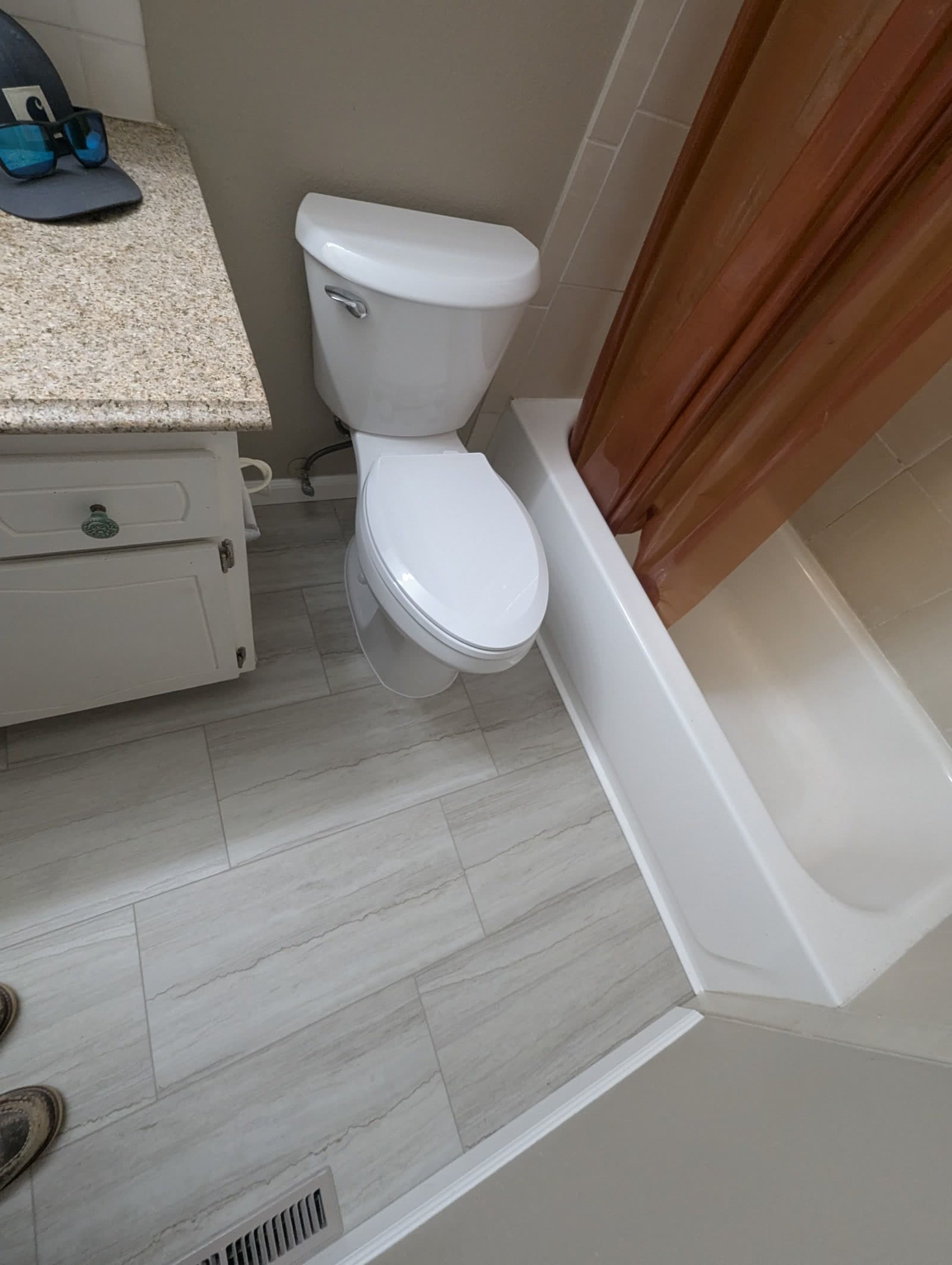
A Loveland homeowner had a leaking toilet and wanted to understand the likely extent of the damage and agree on a repair plan before the floor came up. On the diagnostic visit, Luke walked through the leak, the water damage, and repair options before any work started. When the floor was opened, the team removed multiple layers of old tile and found water damage underneath, rebuilt the floor, restored the toilet, and painted the vent grate to match.
Read the Loveland case study. Work is backed by a 3 Year Workmanship Guarantee. If our workmanship fails within three years, we come back and make it right. Materials follow manufacturer coverage. The site shows 5.0 from 63 Google reviews. One of those reviews, from Eric, says: "He clearly explained the process, provided options, answered questions and the results were excellent."
The owner is a Colorado master plumber. The company was founded in 2021. Financing is available. Ask when you call or text. We work as a plumber in Fort Collins, a plumber in Windsor, and a plumber in Loveland.
Frequently asked questions
Can a leaking wax ring cause a smell?
Yes. When the wax ring under the toilet fails, sewer gas can escape around the base, and a small amount of water can seep out with each flush. The smell is usually strongest low, right where the toilet meets the floor.
Why is there a sewer smell from my toilet but no leak?
A failed seal can leak gas, and a little water, down into the subfloor without leaving a puddle you can see. A dry drain trap or a vent problem can also cause a sewer smell with no leak at all. Run the drains first, and if the smell stays at the base, have the toilet pulled and checked.
Why does my toilet smell like urine even after cleaning?
Either urine has soaked into the caulk or grout around the base, or the seal under the toilet is letting seepage and gas out. If a deep clean of the base and caulk line does not fix it, or you see staining spreading from under the toilet, the seal is the likely cause.
Why does my toilet smell like sewage after flushing?
A smell right after a flush often points to the wax ring or flange. Each flush pushes water and air through the drain connection, and a gap in the seal lets some escape at the base. A vent problem can cause a similar pattern, which is why a plumber checks both.
Can I just re-caulk around the toilet to stop the smell?
No. Caulk seals the outside edge of the toilet to the floor, not the drain connection under it. A full bead can trap a leak against the subfloor and hide it. The fix is a new seal on a solid flange, and a floor repair if the wood underneath is damaged.
Who fixes a toilet that smells like sewage?
A plumber. They check the drains and vents, pull the toilet, and replace the seal and flange if needed. If the floor under it has been soaking up water, Good Life Home Co. repairs the flange, subfloor, and flooring with the same in-house team.