
Blog
Why Is My Toilet Rocking, and Is the Floor Rotten?
A toilet usually rocks for one of four reasons: loose bolts, an uneven floor, a broken or too-low flange, or subfloor softened by a slow leak. If the floor is firm and dry, snugging the bolts and adding plastic shims may fix it. If the bolts spin or the floor feels soft, the toilet needs to come up. See [toilet repair](/plumbing/toilet-repair).
Rocking also breaks the seal, so a rocking toilet is often a leaking one. Good Life Home Co. fixes the flange and the floor with one in-house team in Fort Collins, Windsor, and Loveland. Call or text 970-610-6200.
Written with Luke Buelow, Colorado master plumber, Good Life Home Co.
The four reasons a toilet rocks
A toilet is held to the floor by two closet bolts through the flange, and it is sealed to the drain by a wax ring or a wax-free seal. The flange should sit on the subfloor, and the finished floor should meet the base so the toilet does not balance on a high spot or hang over a low one. Toilet rocking starts when one of those pieces is loose, uneven, broken, or sitting on wood that has gone soft.
Uneven floor
Rocks on one corner. Floor is firm and dry. Plastic shims can help.
Loose bolts
Moves every direction. Nuts turn and tighten on a firm, dry floor.
Broken or low flange
Bolts spin or the toilet sits low. The toilet has to come up.
Soft subfloor
The floor gives. Resetting the toilet will not hold until the floor is repaired.
| Cause | What you notice | Floor around it | Usually fixed by |
|---|---|---|---|
| Uneven floor | Rocks on one corner or edge; bolts are snug | Firm and dry | Plastic shims, bolts snug but not cranked |
| Loose bolts | Moves in every direction; nuts turn and tighten | Firm and dry | Snug the nuts evenly, a little at a time |
| Broken or low flange | Bolts spin or will not tighten; toilet sits low; often after new flooring | Firm or damp | Lift the toilet; repair ring, spacer, or a new flange; new seal |
| Rotted subfloor | Rocks more when you sit; floor gives or dips; stains | Soft, spongy, or stained | Open the floor, new subfloor, joists checked, flange, reset |
Use the table as a sorting tool, not a diagnosis. Two causes can be true at once. A toilet rocking and leaking is often the loose-bolt or uneven-floor case that has already started to damage the seal, or it is the floor case that started with a slow leak.
Toilet rocking front to back vs side to side
Side to side, or on one corner, often means the floor is not flat under the base. That is common on tile. Toilet rocking front to back can point to a flange sitting too high, so the toilet balances on it, a gap at the front or back of the base, or loose bolts. Either direction can also be a soft floor.
Direction is a clue. It is not a diagnosis. Press the floor in the direction that moves before you decide it is only the bolts.
Toilet rocking on the flange
If the nuts spin without tightening, a bolt slot in the flange is likely broken, or the flange is not anchored to the floor. If the floor was redone, new tile or vinyl over the old floor, the flange may now sit below the finished floor so the seal cannot compress. Toilet rocking on the flange after a new floor is a height problem as often as it is a crack.
For a low flange, a spacer or extender, or a new flange at the right height, is the more reliable fix. Sources disagree about stacking wax rings, so we do not state that as a rule. The flange should sit on top of or even with the finished floor. Too low and the seal cannot compress. Too high and the toilet can rock.
Flanges are made in PVC, ABS, cast iron, and brass, and the new piece should match the drain. Cast iron and old brass or lead setups are not a handy-homeowner project. A wax ring cannot be reused once it has been compressed. Any time the toilet is lifted, the seal is replaced. This post does not give the steps for that lift.
If the floor under that flange is soft, the flange repair is only half the job. Fix the flange and the floor together, or the rocking comes back.
Why a rocking toilet and a leak go together
Every rock squashes and shifts the wax seal a little. After that, some water can get out under the base with each flush, onto the subfloor where you cannot see it. The wet subfloor softens, the bolts lose their grip, and the toilet rocks more. Toilet rocking and leaking feed each other.
Treat a rocking toilet as a possible leak even if the floor looks dry. Do not caulk the base to stop the wobble. Caulk can hide water. This is not an emergency service we advertise, and it is also not something to leave for months. Shut the supply valve if water shows up when you flush, and use another bathroom until it is checked.
Check it yourself: safe steps
These take a few minutes and no special tools. They tell you which of the four causes you are likely dealing with.
- Rock it by hand. Gently push the bowl side to side, then front to back. Note which direction moves and whether one corner lifts.
- Press the floor. Stand next to the toilet and shift your weight onto the floor at the front and the sides. Is it firm, or does it give or dip?
- Look for water and stains. Wipe the base dry, flush, and watch for water at the base. Look for stained grout, lifting vinyl, or a ring around the base.
- Check the bolts. Pop off the bolt caps. With a wrench, try snugging each nut a little, alternating sides. Stop when they are snug. If they tighten and the rocking stops, you may be done. If they spin without tightening, stop. The flange is likely broken.
- Look for gaps. If the bolts are snug and it still rocks on one corner, look for a gap between the base and the floor. That is the uneven-floor case, where plastic shims make sense.
- Look below if it is easy. Check the ceiling under an upstairs bathroom, or look from the crawlspace or basement access with a flashlight. A stain or dark wood under the toilet is a floor problem. Do not crawl into a tight or wet space.
- Take photos of the base, the bolts, the floor, and anything below.
What is reasonable to DIY, and where DIY stops
Reasonable for a handy homeowner, and only on a firm, dry floor: snug the closet bolts a little at a time, alternating sides, and slide in plastic toilet shims where there is a gap. Trim the shims flush. Never use wood shims or improvised scraps. Wood swells when it gets wet and can stain the floor. Overtightening closet bolts can crack the porcelain, so snug means snug, not cranked.
Borderline, and only if you are comfortable lifting a toilet: pulling the toilet to replace the seal and add a flange repair ring on a PVC flange that is still in good shape. It is a two-person lift, and the wax ring is new every time. This page does not turn that into a how-to. If you are not comfortable lifting it, that is a reason to call, not a reason to push through.
Stop and call when the list below matches what you see. The line that matters most: if the floor is soft, stop. Resetting a toilet on a soft subfloor does not hold. The bolts have nothing solid to bite into, and the rocking comes back.
What a soft floor means, and how deep it can go, is a different article: what a soft floor near the toilet means.
Stop and call if:
- Bolts spin or will not tighten, or a flange piece is visibly broken.
- The floor feels soft, dips, or flexes.
- Water shows up at the base after flushing, or you smell sewer gas.
- There is a stain on the ceiling below, or dark wood below.
- It keeps rocking after shimming and snugging, or it came back after you fixed it before.
- The flange is cast iron or brass, or you would have to lift the toilet and you are not comfortable doing it.
- Any discoloration you want checked.
Do not crank the bolts. Do not use wood shims or scraps. Do not caulk around the base to hide the wobble. Do not keep using a toilet that leaks when flushed. If it leaks, shut the supply valve behind the toilet and use another bathroom until it is checked.
Call or text 970-610-6200. If it is a quick fix, we will tell you. If it is the floor, we will say that too.
When the floor is the problem: what the repair looks like
The short version, not the full process: pull the toilet, open the floor to sound wood, check the joists and repair them if needed, set a new subfloor, set the flange at the right height for the finished floor, put back flooring, trim, and paint, and reset the toilet with a new seal.
Most plumbers reset the toilet and stop at the floor. The floor then goes to a carpenter or a general contractor. Good Life Home Co. keeps plumbing and handyman work under one roof, so the same in-house team does the flange, subfloor, joists, flooring, and toilet. That scope is toilet leak floor damage repair.
We look first and agree on the price before work starts. No price table, and no job-duration claim. The first look and quote is usually within a couple of days. Financing is available.
A real example: Loveland toilet leak
A toilet was leaking. The homeowner wanted to understand the likely extent of the damage and agree on a repair plan before the floor came up. On a diagnostic visit, Luke walked through the leak, the water damage, and the options before any work started. When the floor was opened, the team removed multiple layers of old tile, rebuilt the floor, restored the toilet, and painted the vent grate to match.
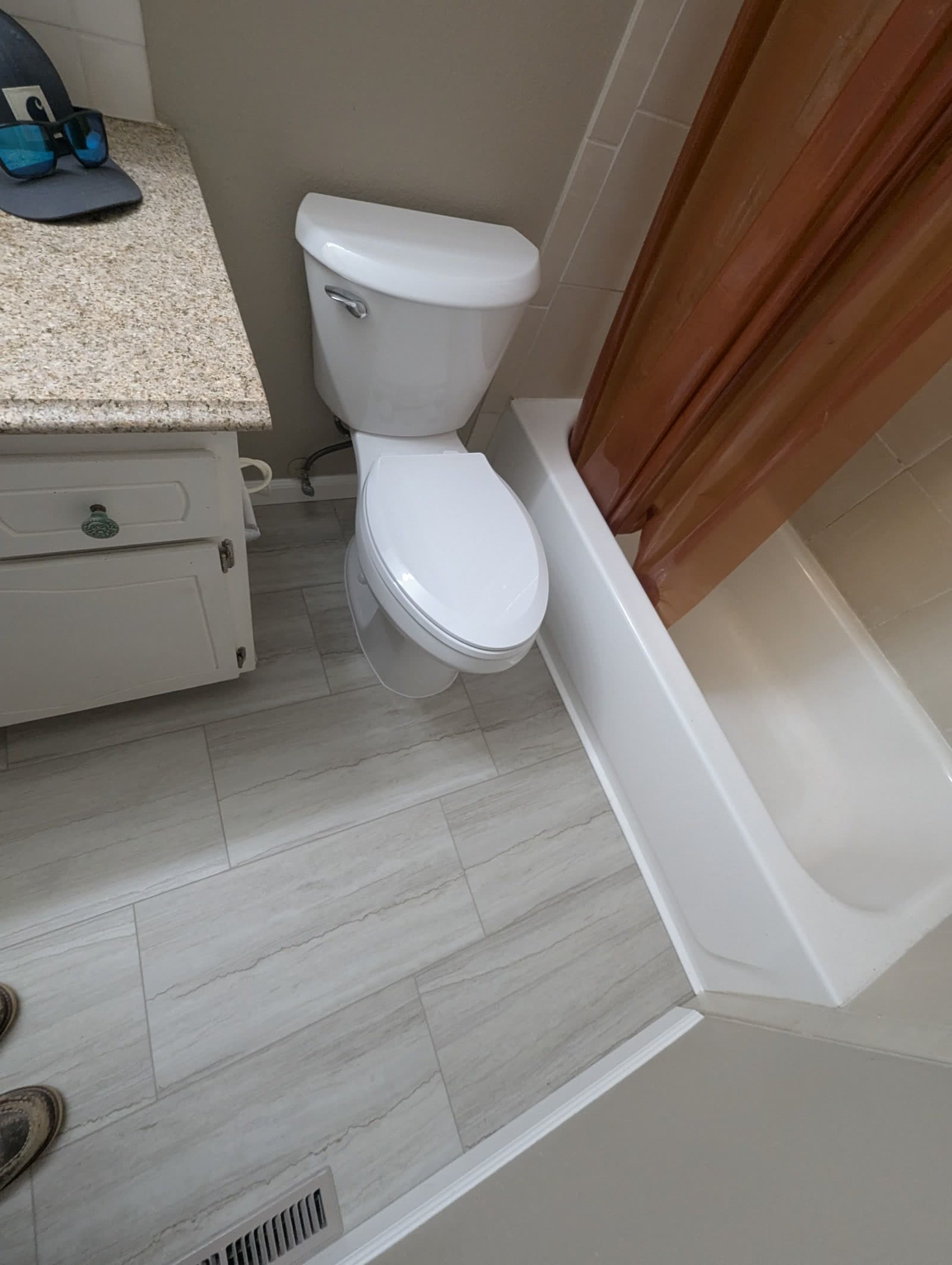
In a Fort Collins home, the team pulled damaged subfloor around the toilet and found a broken toilet flange letting water through to the kitchen below. They set a new flange at the right height for the finished floor and installed new subfloor and flooring. The kitchen ceiling was repaired as part of that same job. The projects page has the photos and the written account.
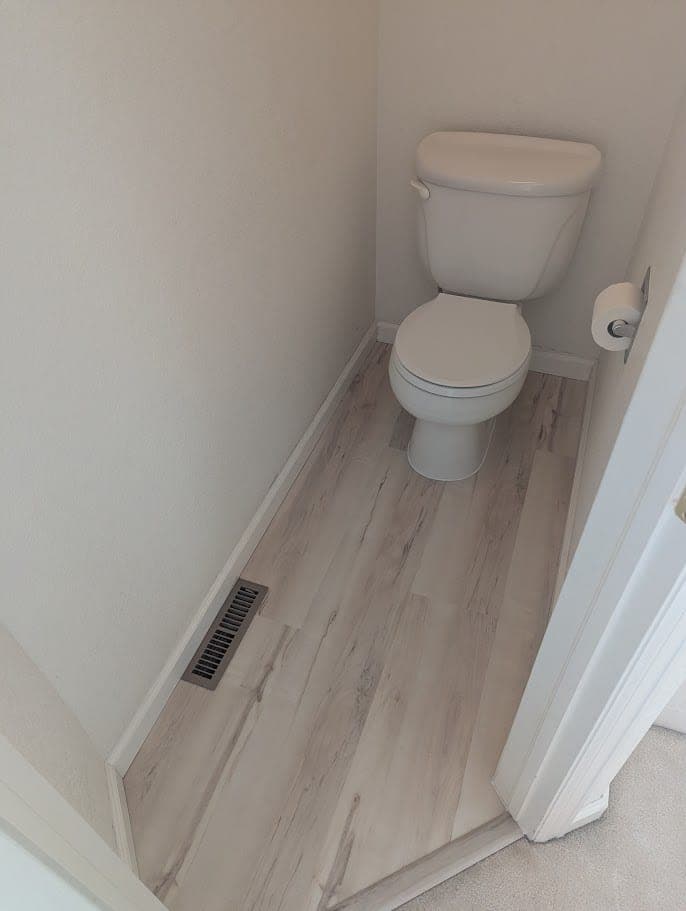
Bob, in a Google review published on the site, said: "Luke was great to work with and came up with some very good solutions for a couple of our challenging repairs." The site shows 5.0 from 63 Google reviews. Work carries a 3 Year Workmanship Guarantee. Materials follow manufacturer coverage. The No Change Order Guarantee means the price we agree to on site is the price for that scope. The owner is a Colorado master plumber. The company was founded in 2021.
Frequently asked questions
Why does my toilet keep rocking after I tighten the bolts?
Tightening only fixes loose nuts on a solid base. If it comes back, the floor may be uneven, the flange may be broken or sitting low, or the subfloor may be soft from a leak. Check the floor first. If the floor gives, tightening the bolts will not hold.
Is a rocking toilet leaking?
Often, yes. Movement breaks the wax seal, so some water can get under the base with each flush even if you do not see it. Treat a rocking toilet as a possible leak and do not caulk the base to hide the wobble.
How do I fix a rocking toilet on an uneven floor?
If the floor is firm and dry and the bolts are snug, plastic toilet shims under the gaps usually stop it. Trim them flush. Do not use wood, and do not overtighten the bolts. If the floor is soft, shims are the wrong fix.
What does it mean when a toilet rocks on the flange?
Usually the flange is cracked, not anchored to the floor, or sitting too low or too high for the finished floor. That means lifting the toilet to repair or replace the flange and put in a new seal. A wax ring is not reused.
Why is my toilet rocking front to back?
It can be a flange sitting too high, a gap at the front or back of the base, loose bolts, or a soft floor at the front. Press the floor in front of the bowl. If it gives, it is likely the floor.
Can a rocking toilet mean the floor is rotten?
It can. If the floor around the base feels soft, dips, or is stained, a slow leak has likely softened the subfloor, and resetting the toilet will not hold until the floor is repaired. See what a soft floor near the toilet means.
Can a plumber fix the floor under a toilet?
Many plumbers reset the toilet and leave the floor to another contractor. Good Life Home Co. does both with one in-house team: flange, subfloor, floor joists, flooring, trim, paint, and the toilet. See toilet leak floor damage repair.